CHOOSING THE RIGHT MID-WHEEL DRIVE POWER CHAIR
Choosing a powerchair is a very personal choice. It's about your independence, your comfort, and how you live your life. If you are considering a mid-wheel drive (MWD) powerchair, you are looking at one of the most popular configurations on the market, and for good reason.
This practrical guide will help you understand what makes mid-wheel drive powerchairs special, the trade-offs you will need to consider, and which type of wheelchair might suit your needs best.
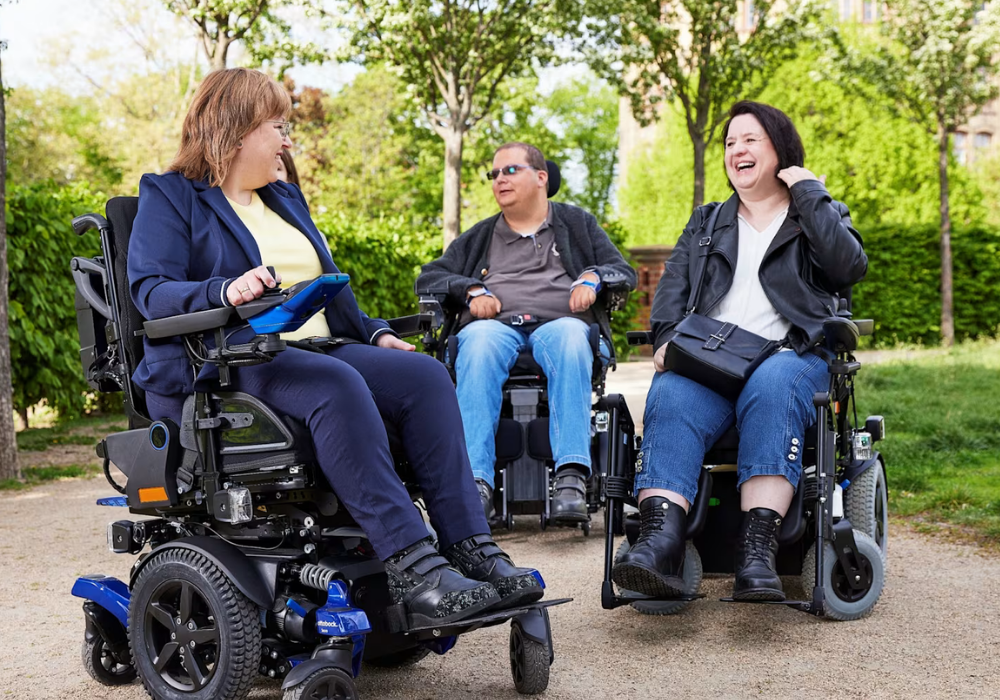
Ottobock Juvo B5/B6
Why Choose a Mid-Wheel Drive Powered Wheelchair?
Mid-wheel drive powerchairs have the main driving wheels positioned directly underneath where you sit, with smaller castors at the front and rear for stability, with a total of six wheels.
This means you will benefit from:
- Incredibly tight turning circle – almost spinning on the spot, perfect for corridors, kitchens, lifts, and shops.
- Intuitive driving feel – you're sitting directly over the pivot point, making control feel natural.
- Good obstacle handling – many six-wheel mid-wheel drive layouts handle small kerbs and thresholds surprisingly well when properly set up.
- Stable – in terms of stability, mid-wheel drive is the most stable due to the configuration of the base.
But there are some trade-offs worth knowing:
- Footplate options – centre-mount footplates are typically more compact and supportive, but swing-away footplates may need to sit further forward to clear the front castors, which makes the chair longer overall.
- Leg positioning – some users find that standard MWD centre-mounts don't provide the wider foot placement they need for comfort or tone management.
- Attendant driving – while many carers manage MWD perfectly well, rear-wheel drive is generally easiest for attendant control, with front-wheel drive being the trickiest.
What Matters Most to You When Choosing a Powered Wheelchair?
Before looking at specific powerchairs, you should think about:
- Where will you use it most? Tight indoor spaces need different features than outdoor trails or rough pavements.
- What's your body's story? Your measurements, posture needs, and any specific positioning requirements.
- Who else might drive your chair? If carers or family will sometimes take the controls, their needs matter too.
- What's your environment like? Doorway widths, kerb heights, ramp gradients, and surface types all play a role.
The Four Categories of Mid-Wheel Drive Powerchairs
1. Compact Mid-Wheel Powerchairs (For Tight Spaces)
Best for: Very tight spaces, narrow doorways, lifts, classrooms, environments where every centimetre counts.
You're prioritising: A narrow base, sharp indoor manoeuvrability, usable suspension for small ramps and thresholds, and enough space for an attendant behind the chair.
Popular choices:
Points to consider:
- If your seat width needs to be over 16” (40cm), the armrests can end up wider than the "narrow" base, reducing the benefit.
- Not all compact bases climb ramps as smoothly as larger models. Trial your trickiest thresholds.
- Some bases extend further at the rear (due to the battery orientation), which can catch a carer's feet during attendant driving.
2. Everyday Mid-Wheel Powerchairs (The All-Rounders)
Best for: Mixed indoor and outdoor use, all-day comfort, and users who need adaptable seating and electronics.
You're prioritising: A stable, comfortable ride; predictable slow-speed climbing; flexible seating hardware for positioning supports; alternative control options; and solid parts support.
Popular choices:
- Permobil M3 Corpus
- Quantum Edge 3
- Sunrise Medical Quickie Q700 M
- Dietz Sango Advanced
- Ottobock Juvo B5/B6
Points to consider:
- Some users find oil-damped suspension systems (which uses oil-filled shocks to absorb bumps) feel noticeably smoother over cobbles and uneven paving.
- Seat hardware flexibility varies by brand. If you need very specific thigh or torso positioning, check how easily components can be moved or swapped.
- The Quickie Q700 M is a physically large base, it’s great for stability but confirm doorway widths and turning clearances at home.
3. High-Powered Mid-Wheel Powerchairs (Built for Challenges)
Best for: Heavier users, steeper hills, rougher paths, and lifestyles that span from supermarket aisles to countryside trails.
You're prioritising: Higher-torque motors and gearing, confident slow-speed climbing over obstacles, and tyre options that provide both traction and shock absorption.
Popular choices:
- Sunrise Medical Magic Mobility 360 - notable for optional wider "community/off-road" tyres and strong climbing behaviour
- Permobil M5 Corpus
- Sunrise Medical Quickie Q700 M HD
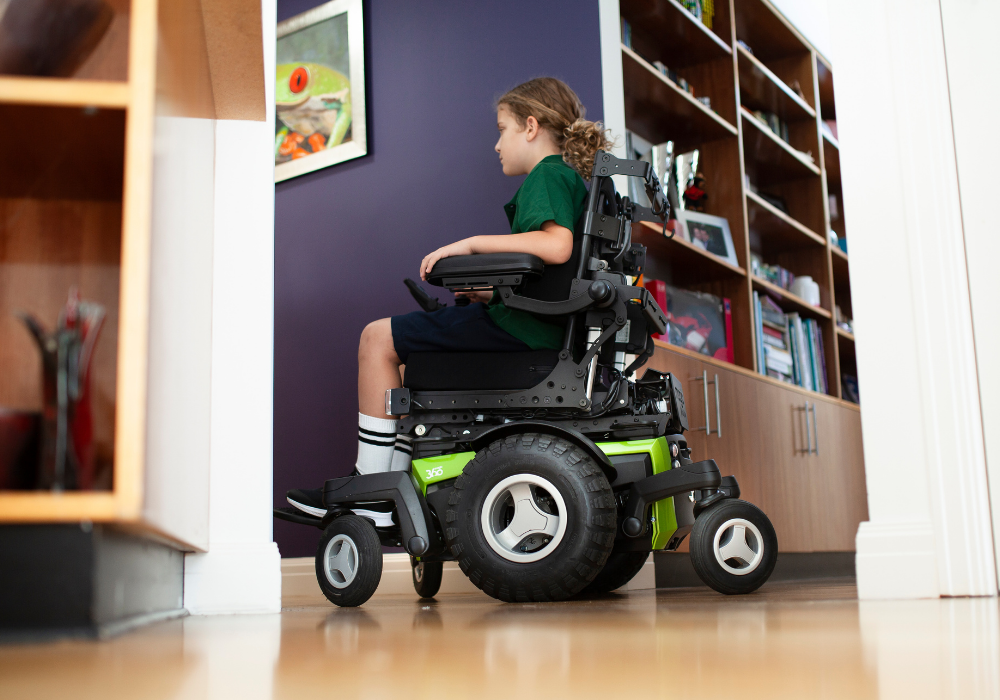
Sunrise Medical Magic Mobility 360
Points to consider:
- Wider tyres can significantly soften impacts and improve grip, but also increase overall width, balance outdoor performance with indoor fit.
- Make sure the chair can crawl over lips and ramps at a slow speed without needing a running start. This is crucial for safe navigation!
4. Budget-Friendly Mid-Wheel Powerchairs (Essential Features First)
Best for: Essential powered mobility with simpler electronics and fewer power seat functions, without compromising reliability.
You're prioritising: Must-have features like power tilt, basic adjustability, reliable parts support, and ideally the potential to upgrade later.
Popular choices:
Points to consider:
- Many "value" models are still prescriptive chairs. Confirm exactly how much seating and control customisation you will actually get.
- If power tilt or alternative controls are non-negotiable, ensure they're available on the specific model you're considering.
Leg Rests & Footplates: A Quick Guide
This might seem like a small detail, but leg rests and footplates significantly affect both comfort and the overall footprint of your chair.
Centre-mount leg rests:
- Compact, robust, and offer better elevation options
- Allow for a true 90-degree knee angle
- Keep the overall length down, brilliant for tight spaces
Swing-away leg rests:
- Handy for transfers
- Often need to sit further forward to clear front castors, lengthening the chair and potentially stretching hamstrings
If you need a wider foot posture for comfort or tone management, discuss footplate width, shape, and castor clearance with your assessor during setup.
When Carers Drive Powered Wheelchairs: What to Consider
If a family member or carer will frequently drive your chair, bring them to your trial. Their experience matters.
As a general rule: Easiest: rear-wheel drive → Middle: mid-wheel drive → Hardest: front-wheel drive
That said, many carers manage MWD chairs perfectly well. Just ensure the handle position and rear clearance suit their height and stride. Some compact models have less clearance at the back, which can cause the base to bump a carer's feet with each step.
Your Powerchair Trial Checklist
When you attend your assessment and trial, bring this checklist with you:
Home fit: Measure your front door, tightest doorway, hallway corners, kitchen access, and bathroom space.
Kerbs and ramps: Note typical kerb heights, ramp gradients, threshold strips, and sliding-door tracks you encounter.
Ride feel: Pay attention to vibrations on paving and cobbles; test stability at slow speed when crossing lips or small obstacles.
Seating and posture: Can the chair position thigh guides, laterals, and other supports exactly where you need them? Do you have room for your preferred leg position?
Controls: Test joystick placement, explore alternative inputs if needed, and have your carer try the attendant controls.
Transport and transfers: Think about vehicle loading, approach space for your transfer method, and whether any pieces need to be easily removable.
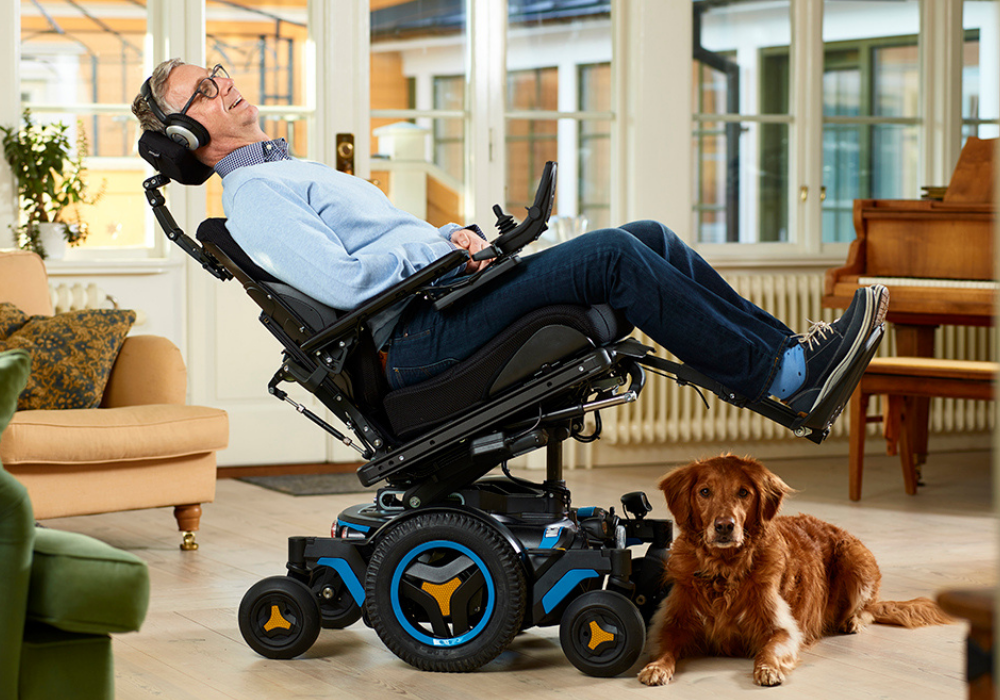
Permobil M3 Corpus
The Bottom Line
Specifications change, availability varies, and what works brilliantly for one person might not suit another.
The "best" mid-wheel drive powerchair is the one that fits your body, your home, your lifestyle, and your priorities. Always check the current specification sheets, work with a knowledgeable assessor, and insist on a proper trial in the environments that matter to you.
Your powerchair isn't just a mobility aid, it's your freedom, your comfort, and your ticket to living life on your terms. Take the time to get it right, and with the right people to help guide you.